Am I in Perimenopause? 15 Signs, When They Start, and Why There's No Single Test
Quick answer: You may be in perimenopause if you're in your late 30s to early 50s and your periods have started to change (shorter, longer, heavier, lighter or skipped), along with symptoms like hot flashes, night sweats, broken sleep, new anxiety, brain fog or joint aches. There's no single blood test for it. Perimenopause is identified by your age, your cycle pattern and your symptoms, taken together.
If you've typed "how do I know if I'm in perimenopause" into a search bar, you're far from alone. It's one of the fastest-growing health searches in the US. Part of the reason: the early signs of perimenopause rarely look like the menopause most of us were taught to expect. It usually isn't one dramatic hot flash. It's a slow pile-up of symptoms that seem unrelated, and that often get treated one at a time.
This guide walks through the most common perimenopause symptoms, when they start, how perimenopause differs from menopause, and what to ask your clinician.

What is perimenopause?
Perimenopause is the transition leading up to menopause, when your ovaries' hormone production becomes uneven. Estrogen and progesterone don't simply fall in a straight line. They rise and dip unpredictably, sometimes month to month. Those swings, more than low hormones alone, drive many perimenopause symptoms.
Perimenopause ends at menopause, which is confirmed after 12 months in a row without a period. In the US, the average age of menopause is about 51.
Perimenopause symptoms: a 15-point checklist
Most women notice several of these, not just one. Tick off what sounds familiar, and bring the list to your next appointment.
Cycle changes (often the first clue)
Periods closer together or further apart than your usual pattern
Heavier or longer periods, or new clotting
Skipped periods
Temperature and sleep
Hot flashes: sudden warmth in the face, neck and chest
Night sweats that wake you up
Waking at 2 or 3 a.m. and struggling to fall back asleep
Mood and mind
New or worse anxiety, irritability or low mood
Brain fog: losing words, forgetting why you walked into a room
Fatigue that rest doesn't fix
Body changes
Joint and muscle aches, or stiffness
Weight shifting to the middle, even without changes in diet
Heart palpitations
New or changing headaches or migraines
Intimate and urinary health
Vaginal dryness, discomfort or painful sex, and lower libido
More urinary urgency or more frequent UTIs
The pattern matters more than any single item. Three or four of these showing up in the same year, at the same life stage, is worth a conversation with a clinician who looks at the whole picture. Want a structured version? Take our free Whole-Picture Check.

When does perimenopause start? (Perimenopause age)
Perimenopause most often begins in your 40s, but it can start in your late 30s. It lasts about four years on average, though for some women it's a few months and for others closer to ten.
That's why searches like "perimenopause symptoms at 40" are so common. Many women in their early 40s still have regular-looking cycles and are told they're "too young" for hormone changes. Regular periods don't rule perimenopause out, especially early on.
Perimenopause vs. menopause: what's the difference?
Perimenopause | Menopause | Postmenopause | |
What it is | The transition; hormones fluctuate | A single point in time | Every year after menopause |
Periods | Irregular but still happening | 12 months with none | None |
Typical age | Late 30s to early 50s | About 51 on average (US) | 50s onward |
Pregnancy possible? | Yes, still possible | No | No |
Many menopause symptoms, like hot flashes and night sweats, actually begin in perimenopause. Some, like vaginal dryness, can continue or appear later. Hot flashes last longer than most people are told: a large US study (SWAN) found the median duration of frequent hot flashes and night sweats was 7.4 years.
Is there a test for perimenopause?
Not a reliable single one. Because your hormones swing day to day, one blood test can look "normal" even when you're well into the transition. Mayo Clinic notes that hormone testing usually isn't needed to diagnose perimenopause.
What testing can do is rule out other causes. Your clinician may check:
Thyroid function, since an underactive or overactive thyroid can cause fatigue, weight change, mood shifts and cycle changes
Iron and blood counts, especially if periods have become heavy
Other labs based on your history, such as blood sugar or vitamin D
So a perimenopause "test" is really a careful conversation: your age, your cycle history, your symptom pattern, and labs to exclude look-alikes.
Perimenopause is often mistaken for something else
Because perimenopause symptoms cross so many body systems, they're easy to split up and treat separately: a sleep aid for insomnia, an antidepressant for anxiety, a referral for joint pain. Each may help a little, while the thread connecting them is missed. In one 2025 survey of US women, about 1 in 4 women aged 40 to 49 said a provider had attributed their perimenopause symptoms to anxiety.
Common look-alikes worth discussing with your clinician:
Perimenopause or thyroid? Both can cause fatigue, weight change and mood shifts. A thyroid check helps tell them apart. Read more on thyroid health.
Perimenopause or anxiety? Hormone swings can trigger new anxiety, irritability or panic-like episodes, even in women with no history of either.
Perimenopause or "just stress"? Stress is real, but it doesn't explain night sweats, cycle changes and new joint pain all at once.
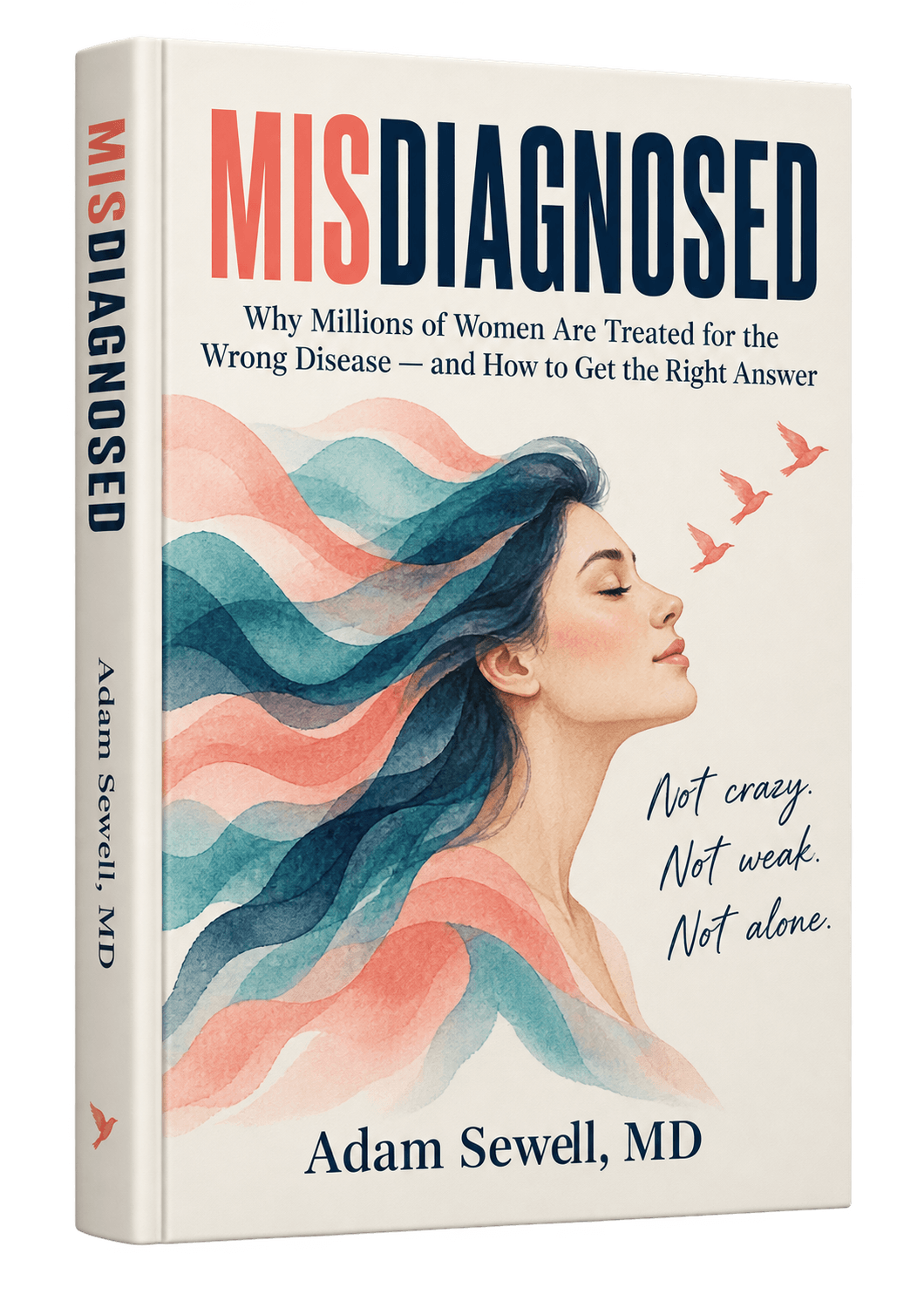
This is the heart of Dr. Adam Sewell's book, Misdiagnosed: midlife symptoms make the most sense when they're looked at together.

What helps? Perimenopause treatment options in 2026
You don't have to just ride it out. Options depend on your symptoms, health history and preferences:
Hormone therapy (HRT/MHT). The most effective treatment for hot flashes and night sweats, and it helps sleep and vaginal symptoms too. In November 2025, the FDA announced removal of the long-standing "black box" warnings about heart disease, breast cancer and dementia from menopause hormone therapy labels. It's still a personal decision that depends on your age, timing and risk factors, so weigh it with a clinician.
Non-hormonal prescriptions. For women who can't or prefer not to use hormones, newer medications such as fezolinetant (Veozah) and elinzanetant (Lynkuet, approved in October 2025) target the brain's temperature-control center to reduce hot flashes.
Low-dose birth control. During perimenopause, it can steady irregular or heavy periods and ease hot flashes, while also providing contraception.
Vaginal estrogen. A low-dose local option for dryness, painful sex and recurring UTIs.
Sleep, movement and stress support. Cognitive behavioral therapy for insomnia, strength training to protect muscle and bone, and limiting alcohol can all make a real difference.
A word on supplements: "perimenopause supplement" is one of the fastest-rising searches, but evidence for most products is limited. Ask before you buy, especially if you take other medications.
When to see a clinician
Book a visit if your symptoms are affecting your sleep, work, relationships or quality of life. You don't need to wait for them to become severe.
See a clinician promptly for:
Very heavy bleeding (soaking a pad or tampon every hour or two)
Periods coming less than three weeks apart, or bleeding after sex
Any bleeding after you've gone 12 months without a period
Chest pain, fainting, or palpitations with dizziness
Thoughts of harming yourself. In the US, call or text 988 any time.
Frequently asked questions
How do I know if I'm in perimenopause?
The clearest sign is a change in your menstrual cycle, such as periods coming closer together, further apart, heavier or skipped, combined with symptoms like hot flashes, night sweats, poor sleep or mood changes, usually in your 40s. A clinician confirms it from your age, cycle history and symptoms rather than a single test.
What are the first signs of perimenopause?
The earliest signs of perimenopause are often subtle: changes in cycle length, heavier periods, waking at night, new anxiety or irritability, and worse PMS. Hot flashes may come later. Many women notice several small changes before they connect them.
Can perimenopause start at 40, or even 35?
Yes. Perimenopause most often begins in the 40s, and some women notice symptoms in their late 30s. Symptoms at 40 are common and worth taking seriously, even if your periods still seem regular.
Is there a blood test for perimenopause?
There's no single reliable blood test, because hormone levels fluctuate from day to day. Clinicians usually diagnose perimenopause from your age, cycle pattern and symptoms, and may order labs such as thyroid tests to rule out other causes.
What's the difference between perimenopause and menopause?
Perimenopause is the transition, when hormones fluctuate and periods become irregular. Menopause is the point when you've gone 12 consecutive months without a period, at about age 51 on average in the US. Many menopause symptoms begin during perimenopause.
How long do perimenopause symptoms last?
Perimenopause lasts about four years on average, but it can range from a few months to around ten years. Hot flashes and night sweats often continue past menopause; a major US study found they last a median of 7.4 years.
Is hormone therapy safe for perimenopause symptoms?
For many healthy women under 60 or within 10 years of menopause, hormone therapy's benefits for symptom relief outweigh its risks. In 2025 the FDA moved to remove the boxed warnings about heart disease, breast cancer and dementia. Safety still depends on your personal history, so discuss it with a clinician.
Ready for answers that fit?
If this checklist sounds like you, you're not imagining it, and you don't have to sort it out alone. Start with our free Whole-Picture Check, or get started with a licensed clinician who looks at the whole picture.
This article is for education only and isn't a substitute for individualized medical care.
Sources
Mayo Clinic: Perimenopause, diagnosis and treatment
US Department of Health and Human Services: FDA initiates removal of black box warnings from menopausal hormone therapy products (Nov 2025)
Harvard Health: FDA removes menopause hormone therapy black box warnings
PharmExec: FDA approves Bayer's Lynkuet for menopausal hot flashes (Oct 2025)
Avis et al., Study of Women's Health Across the Nation (SWAN), JAMA Internal Medicine, 2015: duration of hot flashes and night sweats
The Menopause Society: 2023 nonhormone therapy position statement
Bonafide: State of Menopause 2025 survey