HRT for Menopause, What the Research Says Now
Quick answer: Hormone replacement therapy (HRT), also called menopause hormone therapy (MHT), is the most effective treatment for hot flashes and night sweats, and it also helps sleep, vaginal dryness and bone health. For many healthy women who start it before age 60 or within 10 years of menopause, the benefits outweigh the risks. In November 2025, the FDA announced it would remove the "black box" warnings about heart disease, breast cancer and dementia from HRT labels. HRT still isn't right for everyone, so the decision should be made with a clinician who knows your history.
For more than two decades, many women were told to avoid hormone therapy, and many clinicians stopped prescribing it. That's changing fast. HRT prescriptions for women aged 50 to 65 rose by roughly 86% between 2021 and late 2025, according to Epic Research, and searches for hormone replacement therapy have climbed since the FDA's announcement.
If you're wondering whether HRT is safe, whether it's right for you, or what changed, here's what the research says now.

What is hormone replacement therapy (HRT)?
Hormone replacement therapy replaces some of the estrogen your body makes less of during perimenopause and after menopause. Today, many clinicians prefer the term menopause hormone therapy (MHT), because the goal isn't to restore youthful hormone levels. It's to relieve symptoms and protect long-term health at the lowest effective dose.
HRT usually includes:
Estrogen: the main ingredient, which relieves hot flashes, night sweats and vaginal symptoms.
A progestogen (progesterone or a progestin): needed if you still have a uterus, to protect the uterine lining from estrogen-related overgrowth.
Women who've had a hysterectomy can usually take estrogen alone.
Why HRT got a bad reputation
In 2002, early results from the Women's Health Initiative (WHI) study linked hormone therapy to higher risks of breast cancer, heart disease and stroke. The news made headlines, prescriptions dropped sharply, and the FDA added boxed warnings to estrogen products.
Later analyses painted a more nuanced picture. Many WHI participants were in their 60s and 70s, often more than a decade past menopause, and they used older hormone formulations. For younger women closer to menopause, the risks turned out to be lower than first feared, and the benefits more meaningful. Medical guidance gradually shifted, but the fear stayed with many women and clinicians for years.
HRT black box warning removed: what the FDA changed
On November 10, 2025, the US Department of Health and Human Services and the FDA announced the removal of the boxed warnings on menopause hormone therapy products related to:
Cardiovascular disease
Breast cancer
Probable dementia
Two important details often get left out:
The boxed warning about endometrial cancer remains for systemic estrogen-alone products, because estrogen without a progestogen can thicken the uterine lining if you have a uterus.
Updated labeling highlights timing: starting systemic HRT within 10 years of menopause or before age 60.
The change doesn't mean HRT is risk-free. It means the warnings now better reflect the evidence, and the conversation can focus on your personal benefits and risks.

HRT benefits: what it can help with
Hot flashes and night sweats: HRT is the most effective treatment available, often reducing them substantially.
Sleep: fewer night sweats often means fewer 3 a.m. wake-ups.
Vaginal dryness and painful sex: both systemic HRT and low-dose vaginal estrogen help.
Bone health: HRT helps prevent bone loss and lowers fracture risk.
Mood and quality of life: many women find mood, irritability and day-to-day functioning improve as sleep and hot flashes improve.
HRT isn't approved to prevent heart disease or dementia, and it isn't a weight-loss treatment, though some women find it easier to stay active and sleep well once symptoms ease.
HRT risks: what to weigh
Risks depend on your age, how long it's been since menopause, the type of HRT and your health history. Points to discuss with your clinician:
Blood clots and stroke: the risk is higher with oral (pill) estrogen. Estrogen through the skin, such as a patch, gel or spray, appears to carry a lower clot risk.
Breast cancer: combined estrogen-plus-progestogen therapy is associated with a small increase in risk with longer use. Estrogen alone shows little or no increase in many studies.
Endometrial cancer: prevented by adding a progestogen if you have a uterus.
Timing: starting HRT many years after menopause, or after age 60, carries more risk.
HRT is usually not recommended if you've had breast or endometrial cancer, a blood clot, stroke or heart attack, active liver disease, or unexplained vaginal bleeding. Non-hormonal options exist for women who can't or prefer not to use hormones.
Types of HRT: patch, pill, gel and more
Type | How it's used | Good to know |
Patch | Worn on the skin, changed once or twice a week | Steady dosing; lower clot risk than pills |
Gel or spray | Applied to the skin daily | Flexible dosing; lower clot risk than pills |
Pill | Taken by mouth daily | Familiar and inexpensive; higher clot risk than skin forms |
Vaginal estrogen | Low-dose cream, tablet or ring | Treats dryness, painful sex and recurrent UTIs; minimal effect on the rest of the body |
Progestogen | Pill or IUD | Protects the uterus when you take estrogen |
A note on "bioidentical" hormones: several FDA-approved HRT products are bioidentical, meaning chemically the same as the hormones your body makes. Custom-compounded hormones are different. They aren't FDA-approved, and The Menopause Society advises caution because their dose and purity can vary.
When to start HRT, and am I too old?
Timing matters. Benefits are most likely to outweigh risks for healthy women who start HRT before age 60 or within 10 years of their last period. HRT can also be started during perimenopause if symptoms are bothersome.
If you're over 60 or more than 10 years past menopause, HRT isn't automatically ruled out, but starting systemic HRT needs a more careful look at your heart and clot risks. Low-dose vaginal estrogen is generally an option at any age.
How long you stay on HRT is an individual decision. There's no fixed cutoff; many women review the decision with their clinician once a year.
Is HRT right for you?
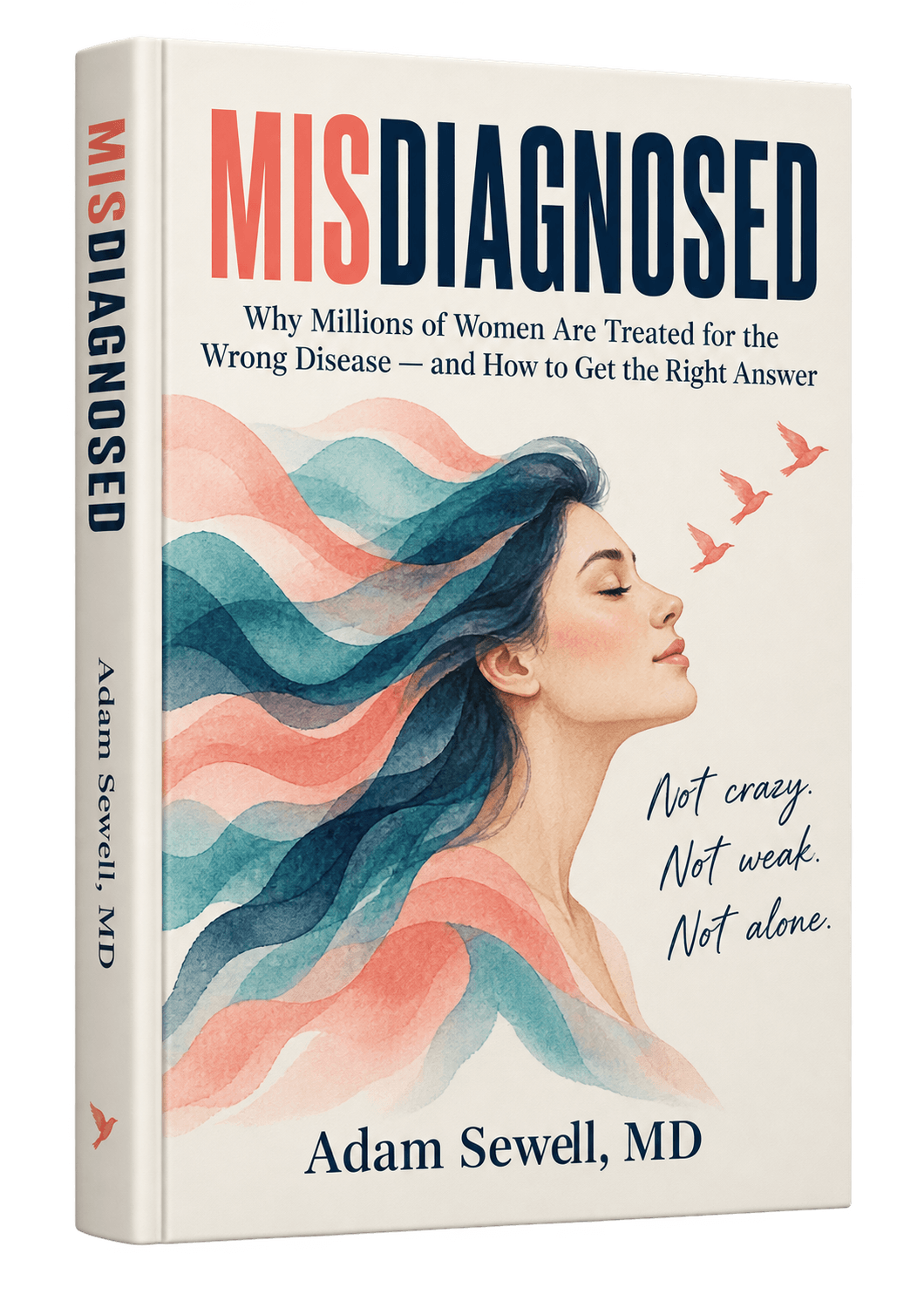
HRT works best as part of a whole-picture conversation. Symptoms such as fatigue, anxiety, weight change and brain fog can come from menopause, but also from thyroid problems, low iron, sleep disorders or other causes. That's the core idea behind Dr. Adam Sewell's book Misdiagnosed: the right treatment starts with the right questions.
Not sure where you are in the transition? Read What Is Perimenopause? or check your symptoms against our 15-point checklist.

How to get started with HRT, including by telehealth
HRT requires a prescription and a review of your health history. Many women can start the process through a telehealth visit. A good evaluation covers:
Your symptoms and how much they affect daily life
Your personal and family history, including breast cancer, blood clots, heart disease and stroke
Your menstrual history and whether you still have a uterus
Labs to rule out look-alikes, such as thyroid problems, when appropriate
A plan for follow-up and adjusting your dose
Learn more about hormone health at PresentHealth, or start with our free Whole-Picture Check.
Frequently asked questions
Is HRT safe?
For many healthy women who start before age 60 or within 10 years of menopause, the benefits of hormone replacement therapy outweigh the risks. Safety depends on your age, the type of HRT and your health history, especially any history of breast cancer, blood clots, stroke or heart disease.
Did the FDA remove the black box warning on HRT?
Yes. In November 2025, the FDA announced removal of the boxed warnings about cardiovascular disease, breast cancer and probable dementia from menopause hormone therapy labels. A boxed warning about endometrial cancer remains for systemic estrogen-alone products.
What are the benefits of HRT for menopause?
HRT is the most effective treatment for hot flashes and night sweats. It also improves sleep, vaginal dryness and painful sex, and helps prevent bone loss and fractures.
What's the safest form of HRT?
There's no single safest form for everyone. Estrogen through the skin, such as a patch, gel or spray, appears to carry a lower risk of blood clots than pills. Women with a uterus also need a progestogen to protect the uterine lining.
Am I too old for HRT?
Benefits are most likely to outweigh risks when HRT starts before age 60 or within 10 years of menopause. Starting later isn't automatically ruled out but needs a careful review of heart and clot risk. Low-dose vaginal estrogen is generally an option at any age.
Can I get HRT through telehealth?
Often, yes. After a review of your symptoms and health history, a licensed clinician can prescribe HRT by telehealth when it's appropriate, with follow-up visits to adjust the dose.
Ready for answers that fit?
HRT is no longer the treatment women were told to fear, but it's still a personal decision. Talk it through with a clinician who looks at the whole picture. Start with our free Whole-Picture Check, or get started today.
This article is for education only and isn't a substitute for individualized medical care. Hormone therapy requires a prescription and a review of your personal health history.
Sources
US Department of Health and Human Services: FDA initiates removal of black box warnings from menopausal hormone therapy products (Nov 2025)
Harvard Health: FDA removes menopause hormone therapy black box warnings
NBC News: Hormone replacement therapy no longer carries warning label
The Menopause Society: 2022 Hormone Therapy Position Statement, Menopause, 2022
Epic Research: trends in menopause hormone therapy prescribing, 2021–2025
Manson et al., Women's Health Initiative long-term follow-up, JAMA, 2013 and 2017