Perimenopause Brain Fog, Anxiety and Rage
perimenopause can cause brain fog, anxiety, irritability and sudden anger, often called "perimenopause rage." Shifting estrogen and progesterone affect brain chemicals that regulate mood, memory and sleep, and poor sleep makes everything worse. These changes are common, real and usually treatable. Because they look like other conditions, they're often missed or misdiagnosed as a stand-alone anxiety disorder or stress. A clinician who looks at the whole picture can help sort out what's driving them.
You walk into a room and forget why. Words you've used for years disappear mid-sentence. Anxiety shows up out of nowhere, and small things make you furious in a way that doesn't feel like you. If this sounds familiar and you're in your late 30s, 40s or early 50s, perimenopause may be part of the story.
Many women never make that connection. In one 2026 survey of 2,000 women, about half said they wouldn't link brain fog or sleep problems to perimenopause. And in a 2025 national survey, nearly 1 in 4 women aged 40 to 49 said a provider had attributed their perimenopause symptoms to anxiety alone.
Here's what's happening in your brain, why perimenopause mood swings and memory changes are so often misread, and what helps.

Why perimenopause affects your brain and mood
Estrogen and progesterone don't just affect your periods. They act throughout the brain:
Estrogen supports serotonin, dopamine and other chemicals that regulate mood, focus and memory.
Progesterone has a calming effect, partly through the same brain pathways targeted by some anti-anxiety medicines.
In perimenopause, these hormones don't simply decline. They swing unpredictably, sometimes from week to week. The brain has to keep adjusting, and for many women, that shows up as anxiety, irritability, low mood or a foggy, scattered feeling. Add night sweats and 3 a.m. wake-ups, and lost sleep amplifies all of it.
Perimenopause brain fog: forgetfulness, lost words and focus
Perimenopause brain fog often looks like:
Losing words or names mid-conversation
Forgetting why you walked into a room
Trouble concentrating or following a long conversation
Feeling slower or more scattered at work
The reassuring part: research suggests this is usually temporary. The US SWAN study found that some women's learning and memory scores dipped during perimenopause, then tended to recover after menopause. Perimenopause memory loss of this kind is different from dementia. Still, worsening memory, getting lost in familiar places, or trouble managing daily tasks should always be checked by a clinician.
Can perimenopause cause anxiety?
Yes. Perimenopause anxiety is common, and for some women it's brand new, with no history of anxiety before. It may show up as:
A constant sense of dread or worry
Racing heart, tight chest or panic-like episodes
Feeling on edge or unable to switch off at night
Anxiety that rises and falls with your cycle
Some physical symptoms of perimenopause, such as palpitations and hot flashes, can feel like anxiety, and the two can feed each other. New chest pain or a racing heart should still be checked, rather than assumed to be hormonal.

Perimenopause rage and irritability
"Perimenopause rage" isn't a medical term, but many women recognize it: sudden, intense irritability or anger that feels out of proportion, followed by guilt. Perimenopause irritability is linked to hormone swings, sleep loss and stress, and it often worsens in the days before a period.
It's not a character flaw. Naming it can help, both for you and for the people around you. If anger feels hard to control or affects your relationships or work, that's a good reason to talk with a clinician.
Perimenopause depression: when it's more than mood swings
Perimenopause is a time of higher risk for depression, even for women with no past history. Research from the SWAN study found women were more likely to experience depressive symptoms during the menopause transition than before it. Women with a history of depression, postpartum depression or severe PMS (PMDD) may be especially sensitive.
Signs that mood changes need more attention:
Low mood or loss of interest lasting two weeks or more
Feeling hopeless, worthless or numb
Changes in appetite or sleep that aren't explained by night sweats
Pulling away from people and activities you used to enjoy
If you're having thoughts of harming yourself, please reach out now. In the US, call or text 988, the Suicide & Crisis Lifeline, any time. If you're in immediate danger, call 911.
Perimenopause or anxiety disorder? Why it's often misdiagnosed
When a woman in her 40s describes anxiety, poor sleep and trouble concentrating, it's easy to treat each symptom on its own, or label it stress. The hormonal pattern underneath is often missed. Other conditions can also overlap and are worth checking:
Thyroid problems, which can cause anxiety, low mood, fatigue and brain fog. Learn more about thyroid health.
Iron deficiency from heavy periods, which adds to fatigue and fog
Sleep apnea, which becomes more common after menopause
ADHD, which some women notice more as hormone shifts unmask it
Vitamin B12 deficiency or medication side effects
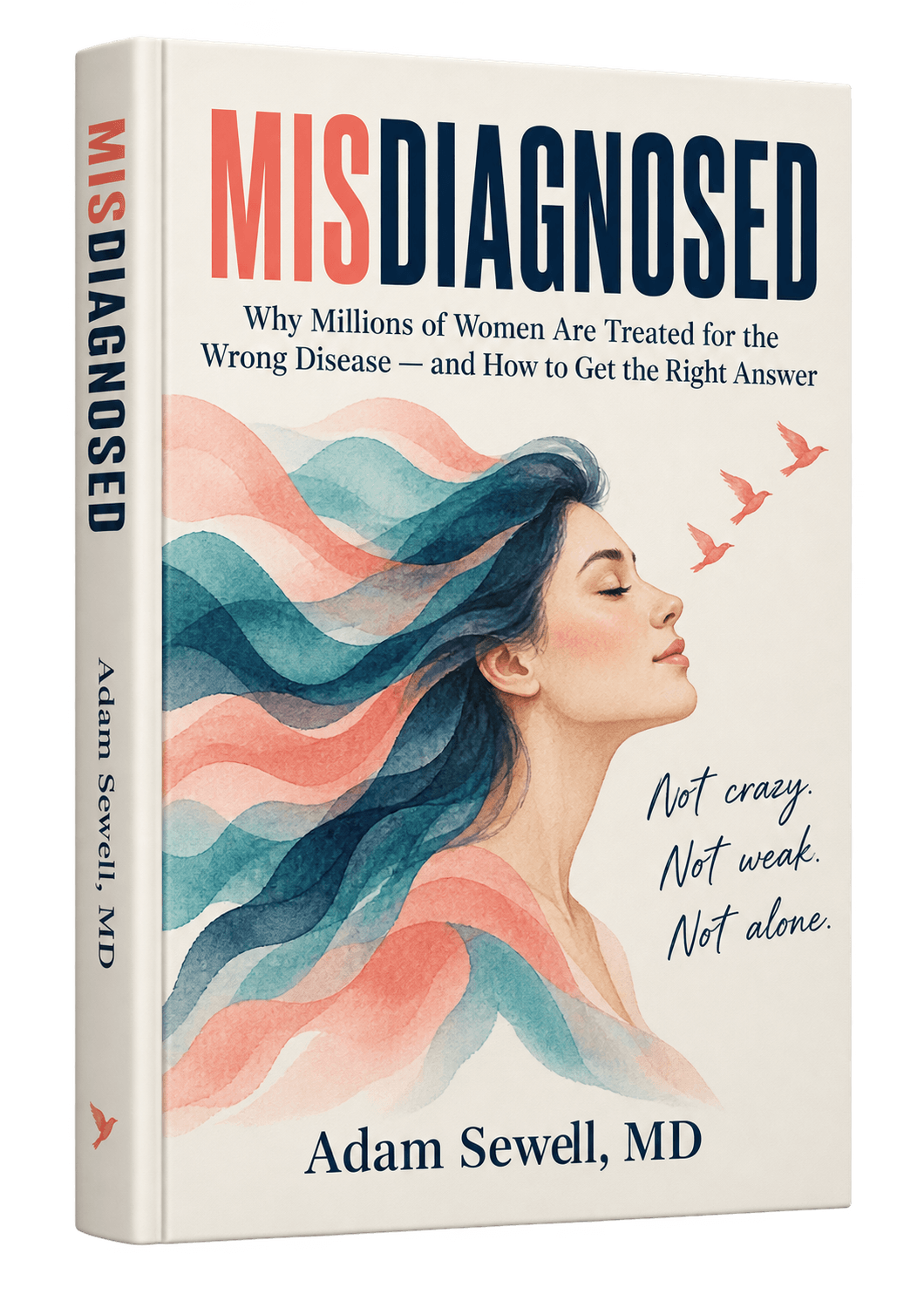
This is the heart of Dr. Adam Sewell's book Misdiagnosed: brain fog, anxiety, sleep problems and cycle changes make the most sense when they're looked at together. To see your full pattern, try our perimenopause symptom checklist.
What helps with perimenopause mood and brain fog
Perimenopause mood treatment works best when it addresses the cause. Options to discuss with your clinician include:
Treating sleep problems first. Better sleep often lifts mood and clears fog. Cognitive behavioral therapy for insomnia (CBT-I) is a proven, drug-free option.
Hormone therapy. For some women in perimenopause, especially those with hot flashes and night sweats, estrogen can improve sleep and mood. It isn't a treatment for depression on its own. Read what the research says about HRT now.
Antidepressants (SSRIs or SNRIs). These are effective for depression and anxiety and can also reduce hot flashes.
Therapy. Cognitive behavioral therapy can help with anxiety, low mood and the stress of this life stage.
Regular exercise, especially a mix of aerobic activity and strength training, which supports mood, sleep and thinking.
Less alcohol, which worsens sleep, anxiety and hot flashes.
Tracking symptoms alongside your cycle, so patterns become visible to you and your clinician.
Learn more about our approach to sleep and mood.

When to talk to a clinician
Book a visit if mood, anxiety or memory changes are affecting your work, relationships or daily life, or if they don't feel like you. Bring notes on when symptoms happen and how they relate to your cycle and sleep. Get help right away for thoughts of self-harm (call or text 988), sudden confusion, or memory problems that are getting worse quickly.
Frequently asked questions
Can perimenopause cause anxiety?
Yes. Fluctuating estrogen and progesterone affect brain chemicals that regulate mood, so perimenopause can cause new or worse anxiety, including panic-like episodes, even in women with no history of anxiety.
What does perimenopause brain fog feel like?
Perimenopause brain fog often feels like forgetting words or names, losing your train of thought, trouble concentrating and feeling mentally slower. Research suggests it's usually temporary and tends to improve after menopause.
Is perimenopause rage real?
Yes. Perimenopause rage isn't a medical diagnosis, but sudden, intense irritability or anger is common in perimenopause. It's linked to hormone swings, sleep loss and stress, and it often worsens before a period.
Can perimenopause cause depression?
Yes. The menopause transition is a time of higher risk for depression, even in women with no past history. Low mood or loss of interest lasting two weeks or more should be checked by a clinician.
How do I know if it's perimenopause or an anxiety disorder?
Clues that point to perimenopause include your age, cycle changes, hot flashes or night sweats, and anxiety that rises and falls with your cycle. A clinician can look at the whole picture and check for look-alikes such as thyroid problems.
Does brain fog go away after menopause?
For most women, yes. Research from the SWAN study found that memory and learning dips during perimenopause tended to recover after menopause. Worsening memory or confusion should always be evaluated.
Ready for answers that fit?
You're not imagining it, and you're not losing your mind. Start with our free Whole-Picture Check, or get started with a licensed clinician who looks at the whole picture.
This article is for education only and isn't a substitute for individualized medical or mental health care. If you're in crisis, call or text 988 in the US, or call 911 for emergencies.
Sources
Mira: 2026 Trends Report (survey of 2,000 women)
Bonafide: State of Menopause 2025 survey
Greendale et al., Effects of the menopause transition on cognitive performance (SWAN), Neurology, 2009
Bromberger et al., Depressive symptoms during the menopausal transition (SWAN), Journal of Affective Disorders, 2007
Maki et al., Guidelines for the evaluation and treatment of perimenopausal depression, Menopause, 2018 (The Menopause Society and National Network of Depression Centers)
Mayo Clinic: Perimenopause, diagnosis and treatment
988 Suicide & Crisis Lifeline: 988lifeline.org