Perimenopause Symptoms at 40: Why They Start Earlier Than You Think
Quick answer: Yes, perimenopause symptoms at 40 are common, and some women notice them in their mid-to-late 30s. Early perimenopause symptoms often include worse PMS, heavier or closer-together periods, waking in the night, new anxiety or irritability, and fatigue, frequently while periods still look regular. Hot flashes usually come later. There's no single test; a clinician looks at your age, cycle changes and symptom pattern together.
Many women in their early 40s are told they're "too young" for hormone changes. Yet surveys of thousands of US women have found that perimenopause-type symptoms show up for many women in their 30s and early 40s. Recent research also suggests US women know less about perimenopause than women in comparable countries, so it's no surprise that "perimenopause symptoms at 40" is one of the fastest-rising health searches.
If you're 40 (or close) and something feels off, here's what early perimenopause can look like, why it's so often missed, and how to find out what's really going on.

Can perimenopause really start at 40, or in your 30s?
Yes. Perimenopause most often begins in the 40s, and it can start in the late 30s. Because menopause arrives at about 51 on average in the US, and perimenopause usually runs several years before it, the early 40s are a very common starting point.
A few things can make perimenopause start earlier: a family history of early menopause, smoking, and treatments such as chemotherapy or ovarian surgery. If you're under 40 and your periods stop or change dramatically, see a clinician: that can signal premature ovarian insufficiency, which deserves its own evaluation. For a fuller explanation of the stages, read What Is Perimenopause? Age, Stages and How Long It Lasts.
Early perimenopause symptoms in your 40s
In early perimenopause, hormones swing rather than simply falling. Progesterone often drops first, while estrogen can spike higher than usual some months. That's why the first perimenopause symptoms at 40 often look more like "PMS turned up" than classic menopause:
Cycle changes: periods a few days closer together, heavier flow, or new clots, even if they still come monthly
Worse PMS: stronger breast tenderness, bloating, mood swings or headaches before your period
Sleep trouble: waking at 2 or 3 a.m. and struggling to get back to sleep
Mood changes: new anxiety, irritability, a shorter fuse, or low mood that doesn't fit your life
Brain fog and fatigue: losing words, losing your train of thought, tiredness that rest doesn't fix
Body changes: new joint aches, weight shifting to the middle, palpitations
Night sweats or flushing: sometimes mild and only around your period at first
For the complete list, see our 15-point perimenopause symptom checklist.

Why perimenopause symptoms at 40 are so often missed
Early perimenopause is easy to overlook, by women and clinicians alike, for a few reasons:
Periods still seem regular. Many people assume perimenopause means skipped periods. In the early stage, cycles often stay roughly monthly, just shorter, heavier or more symptomatic.
Hot flashes aren't the first sign. They tend to arrive in later perimenopause, so women who "don't have hot flashes" may rule it out.
Symptoms get split up. Insomnia goes to one appointment, anxiety to another, joint pain to a third. Each gets its own explanation, and the connecting pattern is missed.
Life is busy at 40. Work, kids, aging parents. It's easy for everyone to blame stress.
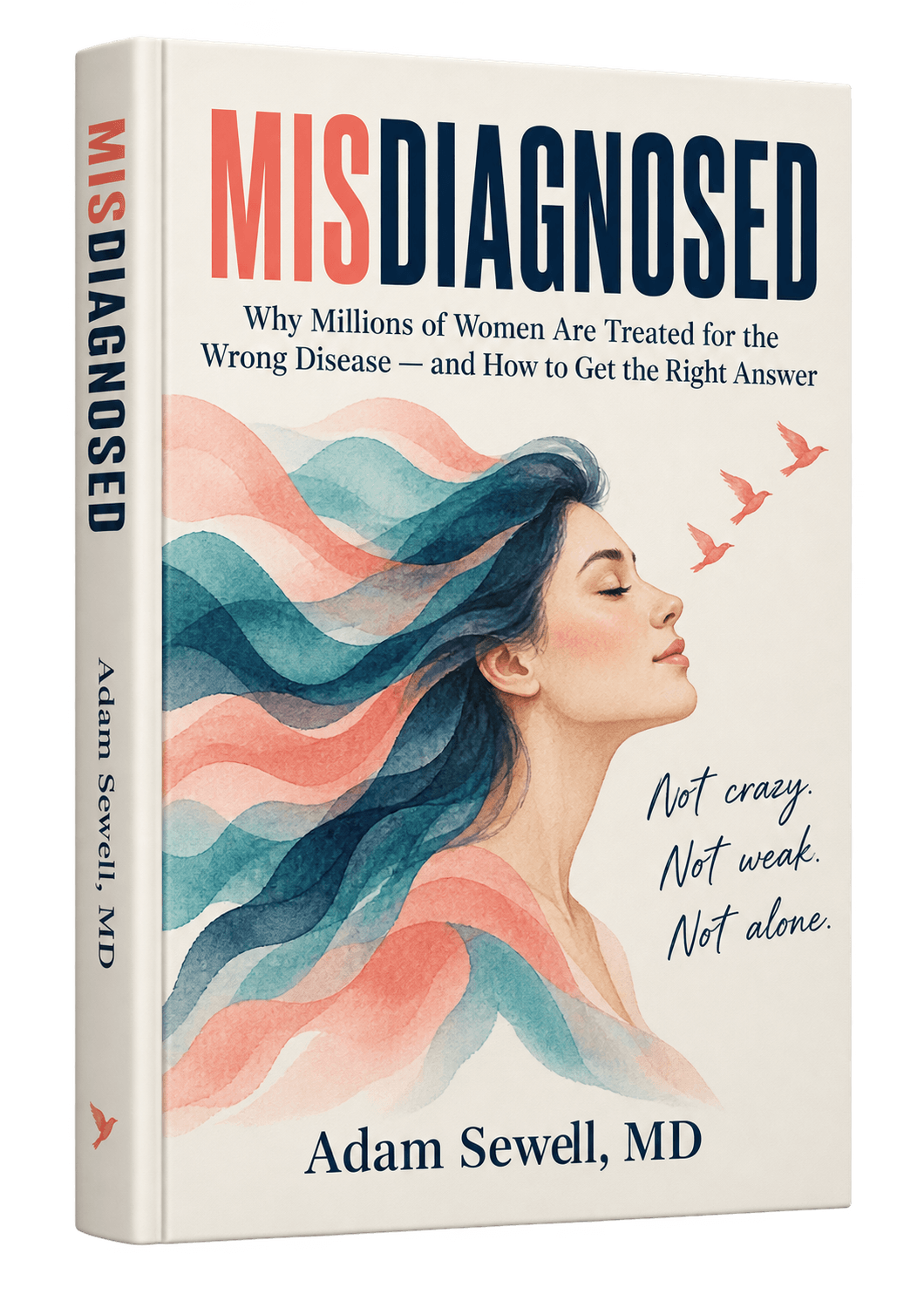
This is the central idea of Dr. Adam Sewell's book Misdiagnosed: midlife symptoms make the most sense when they're looked at together, not one at a time.
Perimenopause, or something else?
Several conditions can look like perimenopause at 40, and some can happen at the same time. Worth ruling out with your clinician:
Perimenopause or thyroid? An underactive or overactive thyroid can cause fatigue, weight change, mood shifts and cycle changes. A thyroid blood test helps tell them apart. Learn more about thyroid health.
Perimenopause anxiety, or an anxiety disorder? New anxiety in your 40s, especially if it rises and falls with your cycle, may be hormonal. Both deserve care, and the right approach depends on the cause.
Iron deficiency. Heavier periods can lower iron, adding to fatigue and brain fog.
Sleep apnea, depression, or medication side effects can also overlap.
How do I know if I'm in perimenopause?
There's no single blood test that confirms perimenopause, because hormone levels change from day to day and even hour to hour. One "normal" result doesn't rule it out. Instead, a clinician looks at three things together:
Your age: late 30s to early 50s
Your cycle: any change in timing, flow or PMS compared with your usual pattern
Your symptom pattern: several changes showing up around the same time
Labs are still useful, mainly to rule out look-alikes such as thyroid problems or low iron. A simple way to start: track your cycle and symptoms for two or three months, and bring notes to your appointment. Our free Whole-Picture Check can help you organize what you've noticed.

What helps with perimenopause symptoms at 40?
You don't have to wait until menopause to feel better. Depending on your symptoms and health history, perimenopause treatment options include:
Low-dose hormonal birth control: can steady irregular or heavy periods, ease PMS-type symptoms and hot flashes, and provide contraception, which you still need in perimenopause.
Hormone therapy: an option for many women with more bothersome symptoms. In November 2025, the FDA announced removal of the "black box" warnings on menopause hormone therapy labels. Whether it's right for you still depends on your personal history.
Non-hormonal options: for women who can't or prefer not to use hormones, including newer prescription medicines for hot flashes.
Sleep, strength and stress support: cognitive behavioral therapy for insomnia, strength training to protect muscle and bone, limiting alcohol, and regular movement can make a real difference.
Be cautious with "perimenopause supplements." They're heavily marketed, but evidence for most products is limited. Ask your clinician before starting one.
When to see a clinician
Book a visit if symptoms are affecting your sleep, work, mood or relationships. You don't need to wait for them to get worse. See someone promptly for very heavy bleeding (soaking a pad or tampon every hour or two), periods less than three weeks apart, bleeding between periods or after sex, or periods stopping before age 40. If you're having thoughts of harming yourself, call or text 988 in the US at any time.
Frequently asked questions
Can perimenopause symptoms start at 40?
Yes. Perimenopause symptoms at 40 are common, and some women notice them in their late 30s. Early signs often include worse PMS, heavier or closer-together periods, poor sleep, new anxiety and fatigue, often before hot flashes appear.
How do I know if I'm in perimenopause?
A clinician considers your age, changes in your menstrual cycle and the pattern of your symptoms together. There's no single reliable blood test, because hormone levels fluctuate, but labs can rule out look-alikes such as thyroid problems.
Can you be in perimenopause with regular periods?
Yes. In early perimenopause, periods often stay roughly monthly but become shorter, heavier or more symptomatic. Skipped periods usually come later in the transition.
What are the first signs of perimenopause in your 40s?
The first signs are often subtle: shorter cycles, heavier periods, worse PMS, waking in the night, new irritability or anxiety, and brain fog. Hot flashes and night sweats typically become more common in later perimenopause.
Can perimenopause start at 35?
It can, though it's less common. Some women notice early perimenopause symptoms in their mid-to-late 30s. Periods stopping before age 40 is different and should be checked by a clinician.
Is there a blood test for perimenopause?
Not a reliable single one. Hormone levels such as estrogen and FSH change from day to day in perimenopause, so one result can look normal. Clinicians use blood tests mainly to rule out other causes.
Ready for answers that fit?
If this sounds like you at 40, you're not imagining it, and you're not too young to be taken seriously. Start with our free Whole-Picture Check, or get started with a licensed clinician who looks at the whole picture.
This article is for education only and isn't a substitute for individualized medical care.
Sources
Mayo Clinic: Perimenopause, diagnosis and treatment
npj Women's Health, 2025: survey of perimenopause symptoms among US women
Harlow et al., Stages of Reproductive Aging Workshop + 10 (STRAW+10), Menopause, 2012
US Department of Health and Human Services: FDA initiates removal of black box warnings from menopausal hormone therapy products (Nov 2025)
Bonafide: State of Menopause 2025 survey