Testosterone for Women: What It Can (and Can't) Do in Menopause, and What the FDA Is Weighing Now
Testosterone for women is gaining attention fast, but the evidence is narrower than many headlines suggest. The best-supported use is treating low sexual desire that causes distress (hypoactive sexual desire disorder, or HSDD) in postmenopausal women, at carefully dosed levels. Research doesn't yet support testosterone for energy, mood, brain fog, weight or muscle. There's currently no FDA-approved testosterone product for women in the US, so it's prescribed off-label. The FDA held a public workshop on testosterone for women in September 2026, and an approved product may come in the future.
If testosterone keeps showing up in your social feed, you're not imagining it. According to a Truveta analysis reported by Reuters in September 2026, the rate of US women receiving a testosterone prescription rose about 146% from January 2023 to July 2026. That analysis hasn't been peer-reviewed, but the trend is clear: more women are asking about testosterone therapy than ever before.
Here's what testosterone can and can't do in menopause, how safe it is, how it's prescribed, and what the FDA's review could mean for you.

Why women have testosterone, and what happens in menopause
Testosterone isn't just a "male hormone." Women make it too, in the ovaries and adrenal glands, and it plays a role in sexual desire, arousal and overall wellbeing. Women's testosterone levels gradually decline with age, starting well before menopause. Women who have both ovaries removed surgically experience a sudden drop.
Unlike estrogen, testosterone doesn't fall sharply at natural menopause. That's one reason researchers have been careful about which symptoms they connect to it.
What testosterone can help: low libido after menopause (HSDD)
The strongest evidence supports testosterone for hypoactive sexual desire disorder (HSDD): low sexual desire that's persistent and causes personal distress. A 2019 Global Consensus Position Statement, endorsed by The Menopause Society and other international medical groups, concluded that this is the only evidence-based use of testosterone in women.
In clinical trials, postmenopausal women with HSDD who used testosterone at doses matching normal premenopausal levels reported modest improvements in desire, arousal, orgasm and satisfaction.
Before considering testosterone, a good clinician looks for other common causes of low libido after menopause, which are often easier to fix:
Vaginal dryness and painful sex from GSM. Read our guide to vaginal dryness and vaginal estrogen.
Poor sleep and night sweats
Depression, anxiety or stress. See our post on perimenopause mood and brain fog.
Medications, especially some antidepressants
Relationship factors and fatigue
Thyroid problems and other medical conditions. Learn about thyroid health.
What testosterone hasn't been shown to do
Much of the online buzz claims testosterone boosts energy, mood, focus, muscle and weight loss in women. According to the Global Consensus Position Statement, there isn't enough evidence to recommend testosterone for:
Fatigue or low energy
Mood or depression
Brain fog or memory
Muscle strength or weight
Bone health
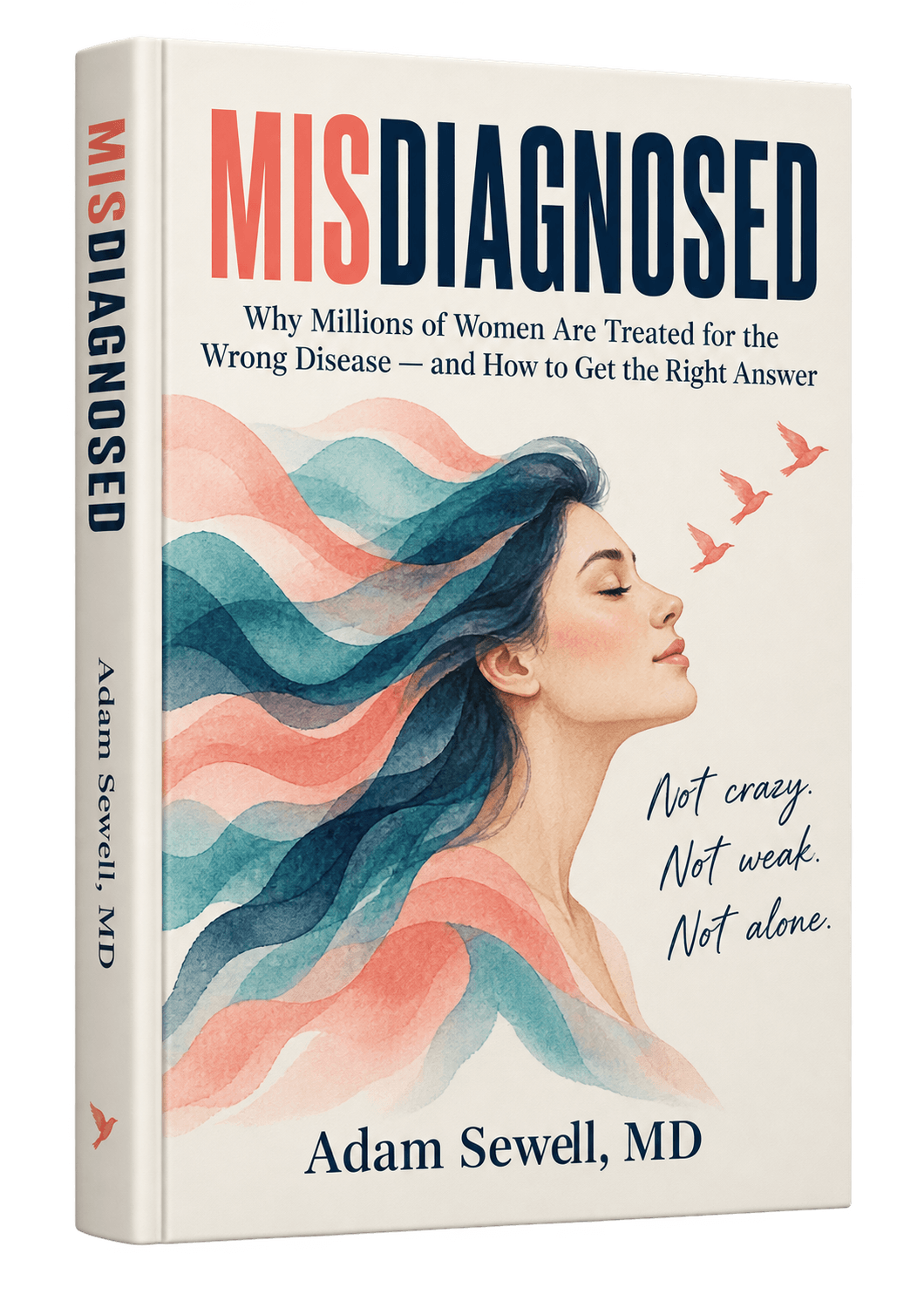
That doesn't mean these symptoms aren't real. It means testosterone isn't a proven fix for them, and the cause deserves a closer look. That idea is at the heart of Dr. Adam Sewell's book Misdiagnosed: the right treatment starts with the right questions, not the trendiest answer.

Is testosterone safe for women?
At doses that keep levels within the normal range for premenopausal women, short-term studies suggest testosterone is generally well tolerated. But long-term safety data, especially for heart health and breast cancer beyond about two years, are limited. The FDA itself has noted the data are inadequate to judge long-term cardiovascular risk.
Possible testosterone side effects in women include:
Acne or oily skin
Extra hair growth on the face or body
Scalp hair thinning
With higher doses: a deeper voice or clitoral enlargement, which may not reverse
Most serious side effects come from doses that push levels well above the normal female range, which is why dosing and monitoring matter so much.
Testosterone cream, pellets and injections: how it's prescribed
Because there's no FDA-approved testosterone product for women in the US, clinicians prescribe it off-label. The current consensus recommendations:
Testosterone cream or gel for women: a skin (transdermal) product is preferred, using a small fraction of a typical male dose. A women's testosterone cream is approved in Australia, but not yet in the US.
Testosterone pellets for women: not recommended, because they can raise levels well above the female range and can't be removed if side effects occur.
Injections and oral testosterone: not recommended for women.
Compounded testosterone: not recommended by the consensus statement, because dose and purity can vary.
Testosterone is usually considered for women who are already on adequate estrogen therapy if they need it. A blood level is checked at the start and again after a few weeks to make sure it stays in the normal female range. If there's no meaningful benefit after about six months, it should generally be stopped.
Can a blood test tell if you need testosterone?
Not on its own. There's no testosterone level that defines "low testosterone" in women or predicts who will benefit. Low testosterone symptoms in women, such as low desire, overlap with many other causes. Blood tests are used mainly to check your starting level and to keep treatment in a safe range, not to make the diagnosis.
FDA and testosterone for women: what's happening in 2026
On September 17, 2026, the FDA's Office of Women's Health and Center for Drug Evaluation and Research held a public workshop on testosterone therapy for women. Experts and patient advocates discussed the evidence, unmet needs and what it would take to approve a product designed for women. The FDA is accepting public comments through October 19, 2026.
No decision has been made. A workshop is an early step, and any approved product would still need to go through the FDA's review process. In the meantime, testosterone for women remains off-label in the US.

Testosterone vs. estrogen: which hormone does what?
Estrogen-based hormone therapy remains the most effective treatment for hot flashes, night sweats, vaginal dryness and bone protection. Testosterone isn't a substitute for it. For women with HSDD, testosterone may be added on top. Read more about hormone replacement therapy, or learn about our approach to hormone health.
A note on "testosterone boosters" sold online: these supplements aren't testosterone, and there's little evidence they work for women. See our supplement evidence guide.
Questions to ask before trying testosterone
What's the most likely cause of my symptoms, and have other causes been checked?
Is my main concern low desire, or something testosterone hasn't been shown to help?
What dose and form would you use, and how will you monitor my levels?
Should my estrogen or vaginal health be addressed first?
How will we decide whether it's working, and when to stop?
Frequently asked questions
What does testosterone do for women in menopause?
The best evidence shows testosterone can modestly improve low sexual desire that causes distress (HSDD) in postmenopausal women. There isn't enough evidence to recommend it for energy, mood, brain fog, muscle, weight or bone health.
Is testosterone safe for women?
At doses that keep levels in the normal range for premenopausal women, short-term studies suggest testosterone is generally well tolerated. Side effects can include acne and extra hair growth. Long-term safety data, especially for the heart and breast, are limited.
Is there an FDA-approved testosterone for women?
No. As of October 2026, there's no FDA-approved testosterone product for women in the US, so it's prescribed off-label. The FDA held a public workshop on testosterone for women in September 2026, with public comments accepted through October 19, 2026.
Are testosterone pellets safe for women?
Testosterone pellets aren't recommended for women by international consensus guidelines. They can raise testosterone well above the normal female range and can't be removed if side effects occur. A low-dose skin cream or gel is preferred.
Can a blood test show if I need testosterone?
No. There's no testosterone level that diagnoses a deficiency in women or predicts who will benefit. Blood tests are used to check a starting level and keep treatment within the normal female range.
Does testosterone help with low libido after menopause?
For postmenopausal women with low sexual desire that causes distress, testosterone can modestly improve desire and satisfaction. Other causes, such as vaginal dryness, poor sleep, mood and medications, should be checked first.
Ready for answers that fit?
Testosterone may help some women, but it's not a cure-all, and the right answer starts with the whole picture. Start with our free Whole-Picture Check, or get started with a licensed clinician who can talk through whether it makes sense for you.
This article is for education only and isn't a substitute for individualized medical care. Testosterone for women is prescribed off-label in the US and requires a review of your personal health history and ongoing monitoring.
Sources
Davis et al., Global Consensus Position Statement on the Use of Testosterone Therapy for Women, Journal of Clinical Endocrinology & Metabolism, 2019 (endorsed by The Menopause Society and other international societies)
Holland & Knight: FDA workshop signals potential approval pathway for testosterone therapy (Sep 2026)
FDA Law Blog: T-Time: women were first to put testosterone back on FDA's agenda (Sep 2026)
Medscape: Experts urge FDA to approve testosterone products for women (2026)
Reuters: Truveta analysis of testosterone prescriptions among US women, September 2026 (not peer-reviewed)
Islam et al., Safety and efficacy of testosterone for women: a systematic review and meta-analysis, The Lancet Diabetes & Endocrinology, 2019