Menopause and Perimenopause Supplements: What the Evidence Actually Shows
Most menopause supplements have weak or mixed evidence. Black cohosh and soy isoflavones haven't reliably beaten placebo for hot flashes, and The Menopause Society doesn't recommend herbal supplements for them. A few supplements can support specific needs, such as vitamin D and calcium for bone health when your intake is low, or creatine alongside strength training for muscle. Supplements aren't FDA-approved for safety or effectiveness before they're sold, so check with a clinician first, especially if you take other medications.
"Perimenopause supplement" is one of the fastest-rising health searches online, and supplements are now the most-searched menopause product category. A 2026 study in JAMA Network Open found the commercial share of US menopause searches rose from 22% to 37%, led by supplements and apps.
That growth makes sense. Many women want natural remedies for menopause, feel brushed off by the medical system, or are wary of hormones. But the shelves (and social feeds) are full of promises the research doesn't back up. Here's an honest look at what works, what doesn't, and how to choose safely.

Do menopause supplements work?
For the most-advertised symptom, hot flashes, the answer is mostly no. Large reviews have found that popular herbal supplements perform about the same as placebo, and the placebo effect for hot flashes is strong, often reducing them by 20% to 30%. That's why a supplement can seem to help even when the ingredient itself isn't doing much.
A few supplements have better support for other goals, such as bone and muscle health. And one issue applies to all of them: in the US, supplements don't need FDA approval before they're sold, so the dose on the label may not match what's in the bottle.
The best supplements for menopause, ranked by evidence
Supplement | Popular for | What the evidence shows | Safety notes |
Black cohosh | Hot flashes | Mixed; overall not better than placebo | Rare reports of liver injury |
Soy isoflavones | Hot flashes | Small benefit at best; inconsistent | Discuss if you've had breast cancer |
Magnesium | Sleep, mood, cramps | Limited menopause-specific evidence | Generally well tolerated; can cause diarrhea; caution with kidney disease |
Creatine | Muscle, strength, energy | Promising for muscle with strength training; menopause symptom data limited | Generally well tolerated; check with a clinician if you have kidney disease |
Vitamin D and calcium | Bone health | Helpful if your intake or levels are low | Avoid megadoses; too much calcium from pills may raise kidney stone risk |
Omega-3 (fish oil) | Hot flashes, mood | No benefit for hot flashes in a large trial | Can interact with blood thinners |
Evening primrose oil | Hot flashes | Insufficient evidence | Can interact with blood thinners |
Black cohosh for menopause
Black cohosh is the classic menopause supplement, and it's among the most-searched. A large Cochrane review found no significant difference between black cohosh and placebo for hot flashes. There have also been rare reports of liver injury linked to black cohosh products. If you use it, tell your clinician, and stop if you notice signs such as unusual fatigue, dark urine or yellowing skin.
Magnesium for menopause and perimenopause
Magnesium is popular for sleep, anxiety, muscle cramps and migraines. It's essential for health, and many adults don't get enough from food. But there's little research showing magnesium specifically relieves menopause symptoms. It's generally safe at typical doses; for most adults, the upper limit from supplements is 350 mg a day. Higher amounts often cause diarrhea, and people with kidney disease should avoid supplements unless their clinician advises them.
Creatine for menopause
Creatine is having a moment, and for good reason. Muscle and bone loss speed up after menopause, and research in older adults suggests creatine combined with strength training can help build muscle and strength. Studies looking at creatine for menopause symptoms such as mood or brain fog are still early. Think of creatine as a possible add-on to strength training, not a stand-alone fix.
Vitamin D and calcium
Estrogen helps protect bone, so bone loss accelerates after menopause. Getting enough vitamin D and calcium matters, ideally from food first. A supplement makes sense when your diet is low or a blood test shows low vitamin D. Neither treats hot flashes, and more isn't better: very high doses can cause harm.

Supplements for hot flashes: what works better
If hot flashes are your main reason for shopping, you have stronger options than supplements:
Hormone therapy (HRT) is the most effective treatment. In November 2025, the FDA announced removal of the long-standing "black box" warnings from menopause hormone therapy labels. Read what the research says about HRT now.
Non-hormonal prescriptions such as Veozah and Lynkuet, plus certain antidepressants and gabapentin. Compare them in our guide to hot flash treatments.
Cognitive behavioral therapy and clinical hypnosis, both recommended by The Menopause Society.
How to choose a supplement safely
If you decide to try a supplement, these steps lower the risk:
Talk to your clinician or pharmacist first, especially if you take blood thinners, antidepressants, thyroid medicine or breast cancer treatment.
Look for third-party testing, such as the USP Verified or NSF Certified seal, which checks that the label matches what's inside.
Choose single ingredients over "proprietary blends," which can hide doses.
Be wary of big promises. Claims to "balance hormones," "detox" or "cure" menopause are red flags.
Try one thing at a time for 8 to 12 weeks, and track whether it actually helps.
Stop and get help if you notice side effects, especially signs of liver problems.
Supplements can mask what's really going on
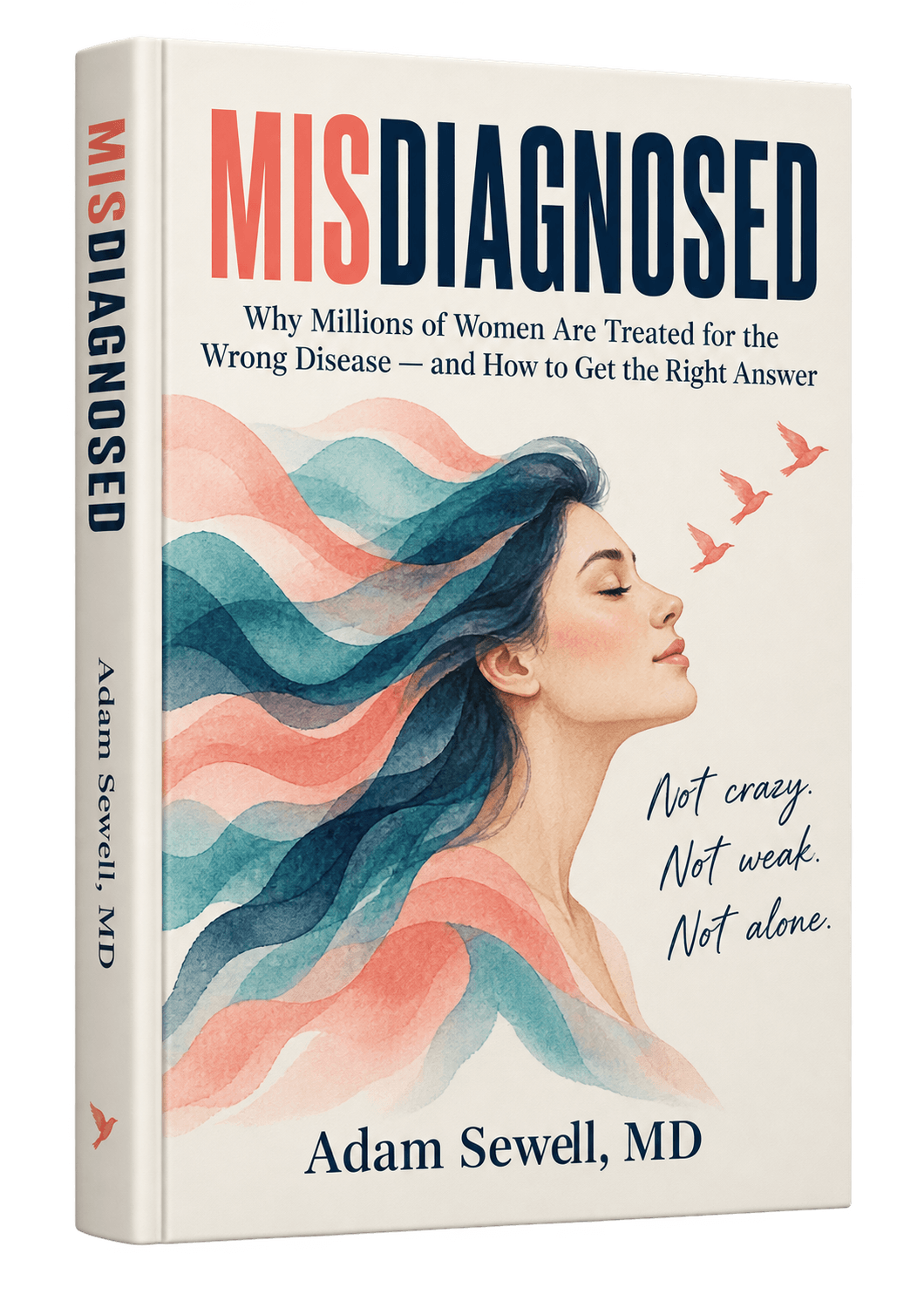
Fatigue, low mood, brain fog and weight change aren't always menopause. They can also come from thyroid problems, low iron, sleep apnea or other conditions that supplements won't fix, and might hide. That's the heart of Dr. Adam Sewell's book Misdiagnosed: the right answer starts with looking at the whole picture. Before adding another bottle to the cabinet, check how your symptoms connect with our perimenopause symptom checklist, and consider whether your thyroid has been checked.

What helps more than most supplements
Strength training two to three times a week, to protect muscle and bone
Protein at each meal, plus calcium-rich foods such as yogurt, leafy greens and fortified foods
Sleep habits that work with night sweats: a cool room, layers and a steady schedule
Less alcohol, which can worsen hot flashes and sleep
A clinician who looks at the whole picture, and can offer proven treatments when you need them
Frequently asked questions
Do menopause supplements work?
Most menopause supplements have weak or mixed evidence, especially for hot flashes, where black cohosh and soy have not reliably beaten placebo. Some, such as vitamin D, calcium and creatine, can support bone or muscle health for specific needs.
What is the best supplement for menopause?
There isn't one best supplement for menopause. Vitamin D and calcium help bone health when intake is low, and creatine may support muscle with strength training. For hot flashes, hormone therapy and non-hormonal prescriptions work far better than supplements.
Does black cohosh help with hot flashes?
Overall, research has not shown black cohosh works better than placebo for hot flashes, and there have been rare reports of liver injury. The Menopause Society does not recommend it for hot flashes.
Is magnesium good for perimenopause?
Magnesium is essential and may help sleep or muscle cramps if you're low, but there's little research showing it relieves perimenopause symptoms specifically. Most adults should keep supplements to 350 mg a day or less unless advised otherwise.
Should women take creatine during menopause?
Creatine combined with strength training may help build muscle and strength, which declines after menopause. Research on creatine for menopause symptoms is still early. Check with a clinician first if you have kidney disease.
Are menopause supplements safe?
Supplements aren't approved by the FDA for safety or effectiveness before they're sold, and some can interact with medications or, rarely, harm the liver. Choose third-party-tested products and talk with a clinician before starting.
Ready for answers that fit?
You deserve more than trial and error with supplements. Start with our free Whole-Picture Check, or get started with a licensed clinician who can help you find what actually works for you.
This article is for education only and isn't a substitute for individualized medical care. Always check with a clinician before starting a supplement, especially if you take other medications.
Sources
Farina et al., JAMA Network Open, 2026: online search trends for menopause products and information
The Menopause Society: 2023 nonhormone therapy position statement
Leach and Moore, Black cohosh for menopausal symptoms, Cochrane Database of Systematic Reviews, 2012
NIH Office of Dietary Supplements: Magnesium fact sheet and Black cohosh fact sheet
Cohen et al., MsFLASH trial of omega-3 for hot flashes, Menopause, 2014
STAT: Perimenopause misinformation, influencers, supplements and hormones (May 2026)